
Literacy & language
Bahasa Melayu and English through communication, sound and letter awareness, reading, writing and functional language.
Curriculum & Individualised Learning
KSS uses KSSR Special Education as the academic foundation and an Individualised Education Plan (IEP/RPI) to organise each learner’s priorities. The aim is not only to know a skill, but to use it more confidently in everyday life.
Six connected domains
Bahasa Melayu and English through communication, sound and letter awareness, reading, writing and functional language.
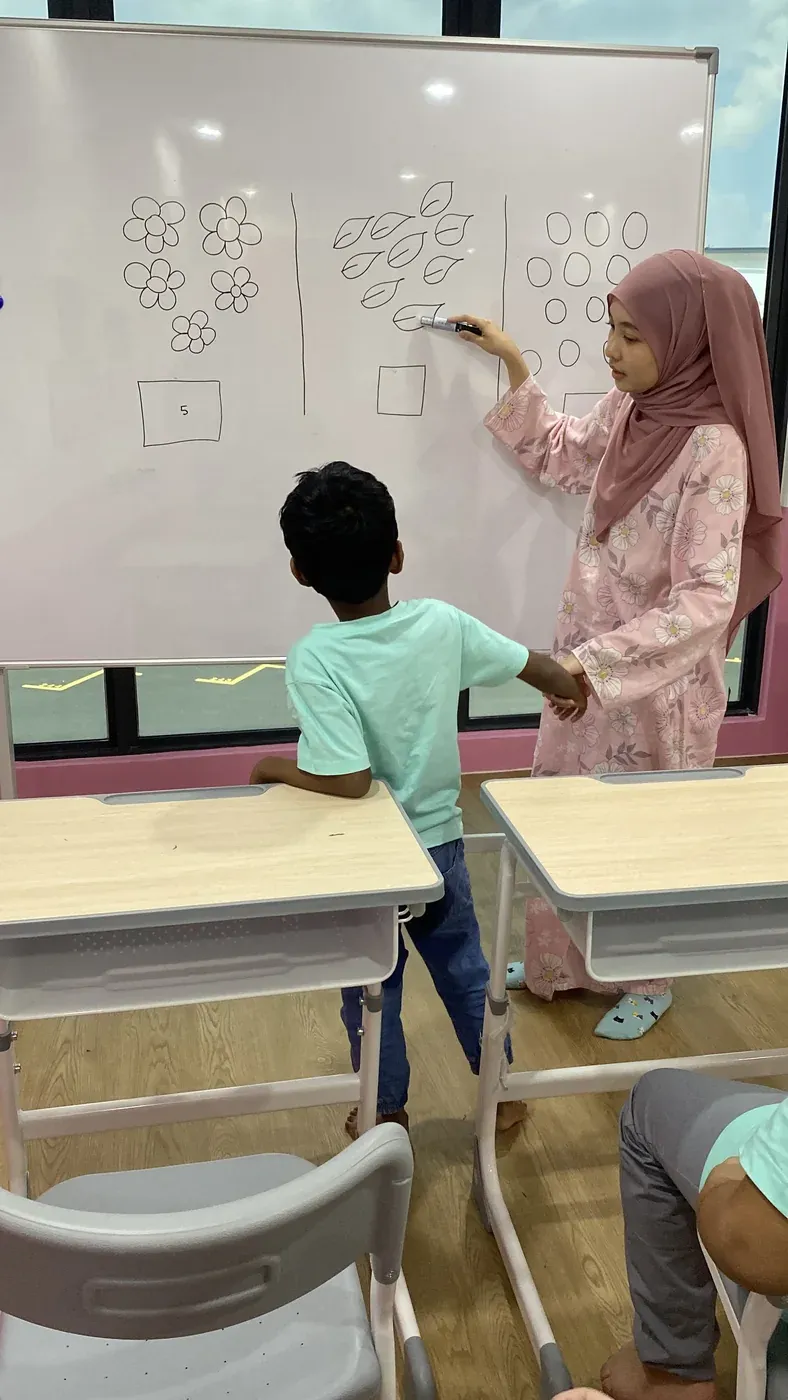
Number sense, quantity, patterns, measurement, time, money and problem-solving with concrete materials.
Hands-on experiences that support observation, questions, classification and simple relationships.
Ask for help, choose, understand directions, share attention, take turns and join peers.
Recognise state, use movement or rest strategies, manage transitions and return to learning.
Meal routines, tidying, personal care, responsibility, good manners, prayer and independence.
Individualised Education Plan
An IEP should not become a list of everything the child cannot yet do. It connects current strengths and barriers to meaningful goals, teaching strategies and evidence.
Bring together family information, reports, observation, strengths, interests, communication and current function.
Identify goals that matter to the learner’s education and everyday participation.
Use strategies within classroom routines and natural practice opportunities.
Use observation, work samples, portfolios and task data to understand the response.
Continue, adapt or replace goals based on evidence and discussion with the family.
Responsive teaching
Important boundary
Teaching may be shaped by relevant principles from occupational therapy, speech-language support, early intervention or behaviour support. Educators remain responsible for education, and clinical services are only described when delivered by an appropriately qualified professional.
Your next step
A school visit and educational assessment provide a clearer picture than a diagnosis list or test score alone.